
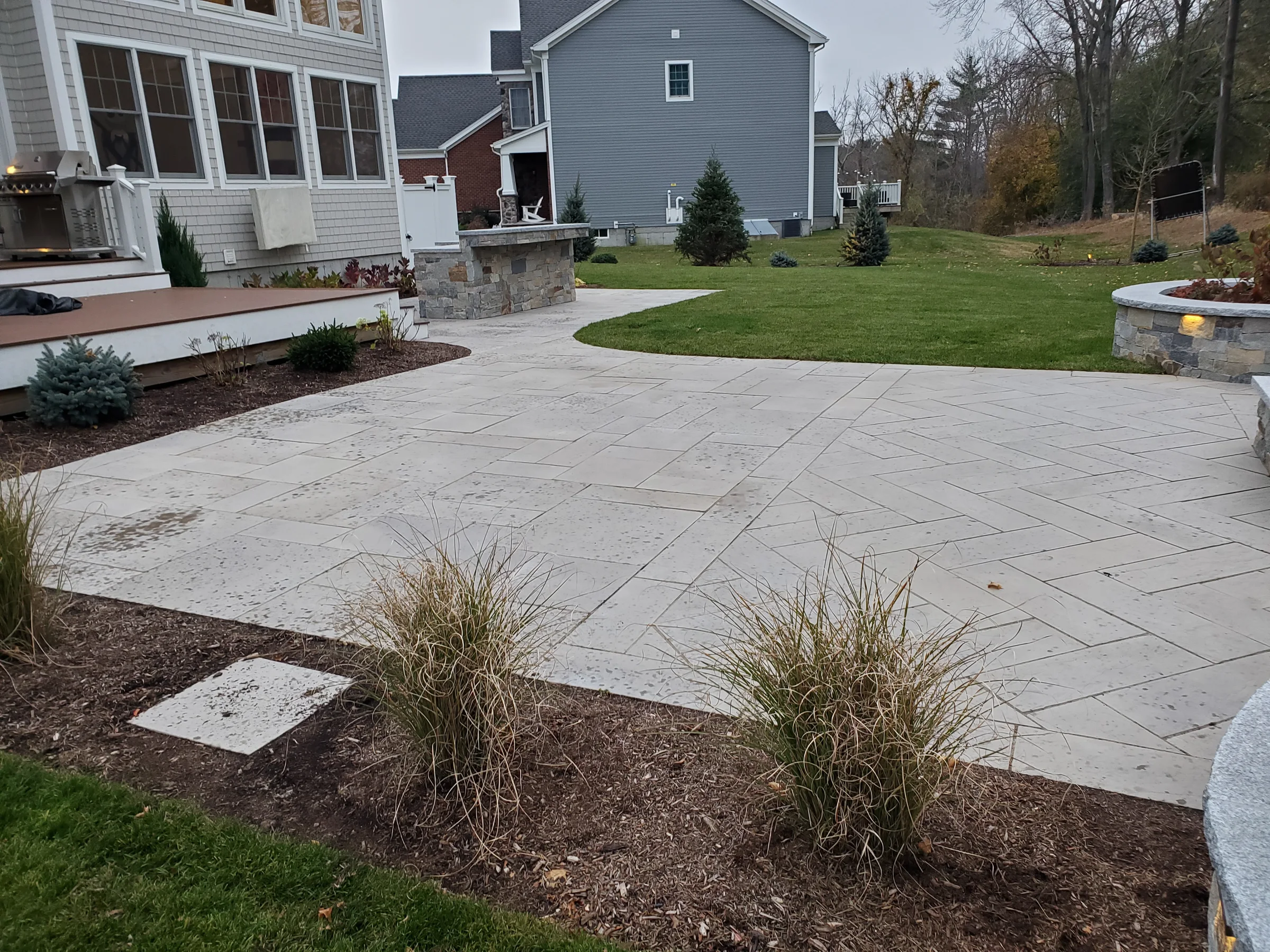
A landscape build can bring together excavation, drainage, masonry, planting, lighting and other specialties. Project management connects those moving parts so one decision does not create a problem for the work that follows.
Useful planning begins with scope. The team and homeowner need a shared understanding of what is included, what decisions remain open and which items depend on permits, selections or site discoveries. This makes the schedule a working tool rather than a promise detached from the project.
Sequencing matters because much of the work becomes inaccessible once a surface is finished. Conduit, drainage, grades and foundations need to be addressed before paving and planting close the site. Material delivery and equipment access also need to be coordinated with the condition of the yard at each stage.
Communication is equally important. Changes in site conditions or selections should be explained in the context of cost, timing and the finished design. Clear points of contact make it easier for the homeowner to understand what is happening and what decision is needed next.
Good project management is not visible as a separate feature when the work is complete. It is visible in the way the parts align, the way transitions are resolved and the way the finished landscape works as planned.